On a high-value home, the roof is not a background detail. It is a large, visible part of what the house is worth and how it reads from the street, so choosing the material is closer to an investment decision than a hardware run. In Trophy Club, where homes are built to an upscale standard across the board, that decision usually comes down to three tiers: a designer laminate shingle, standing-seam metal, or tile. None of the three is simply better than the others. Each carries its own cost, lifespan, weight, and look, and the right call depends on the house, the neighborhood standard, and how long you plan to own it. Here is an honest comparison of the three on a Trophy Club roof, with real cost ranges and a note on where the neighborhood standard narrows the field for you.
Start with what the roof is really worth to the house
Before comparing materials, it helps to size up the stake. On an upscale Trophy Club home, the roof can be one of the single most expensive exterior components, and it is the one buyers and appraisers see first. That means a material choice does two jobs at once, it protects the house and it holds or lifts the home presentation. A roof that looks cheap on an expensive home stands out for the wrong reasons, which is part of why the town architectural standards lean toward premium materials in the first place.
It also means the cheapest option is rarely the smartest one here. A builder-grade three-tab might save money up front, but on a home in a section like The Knoll or the newer custom streets, it can read as out of place and may not even clear the neighborhood standard. The real question is not how little the roof can cost, but which of the premium tiers fits the house and the years you plan to keep it.
Designer laminate, the upscale default
A designer laminate shingle is where most upscale Trophy Club roofs land, and for good reason. It is a heavier, dimensional asphalt shingle built to mimic the look of wood shake or slate, with deeper shadow lines and richer color blends than a standard architectural shingle. It reads clearly as a premium roof from the street, it comes in colors that fit the neighborhood standard, and it installs like a shingle, so labor stays reasonable relative to metal or tile.
The trade-offs are lifespan and matching. A quality designer laminate lasts a long time, but not as long as metal or tile, and because manufacturers revise these premium lines, an older designer roof can be hard to match after a partial repair. For a homeowner who wants a premium look without the weight or cost of metal or tile, though, it is usually the practical anchor of the three. A shingle guide walks through the color and profile choices in more detail.
Standing-seam metal, the long-horizon choice
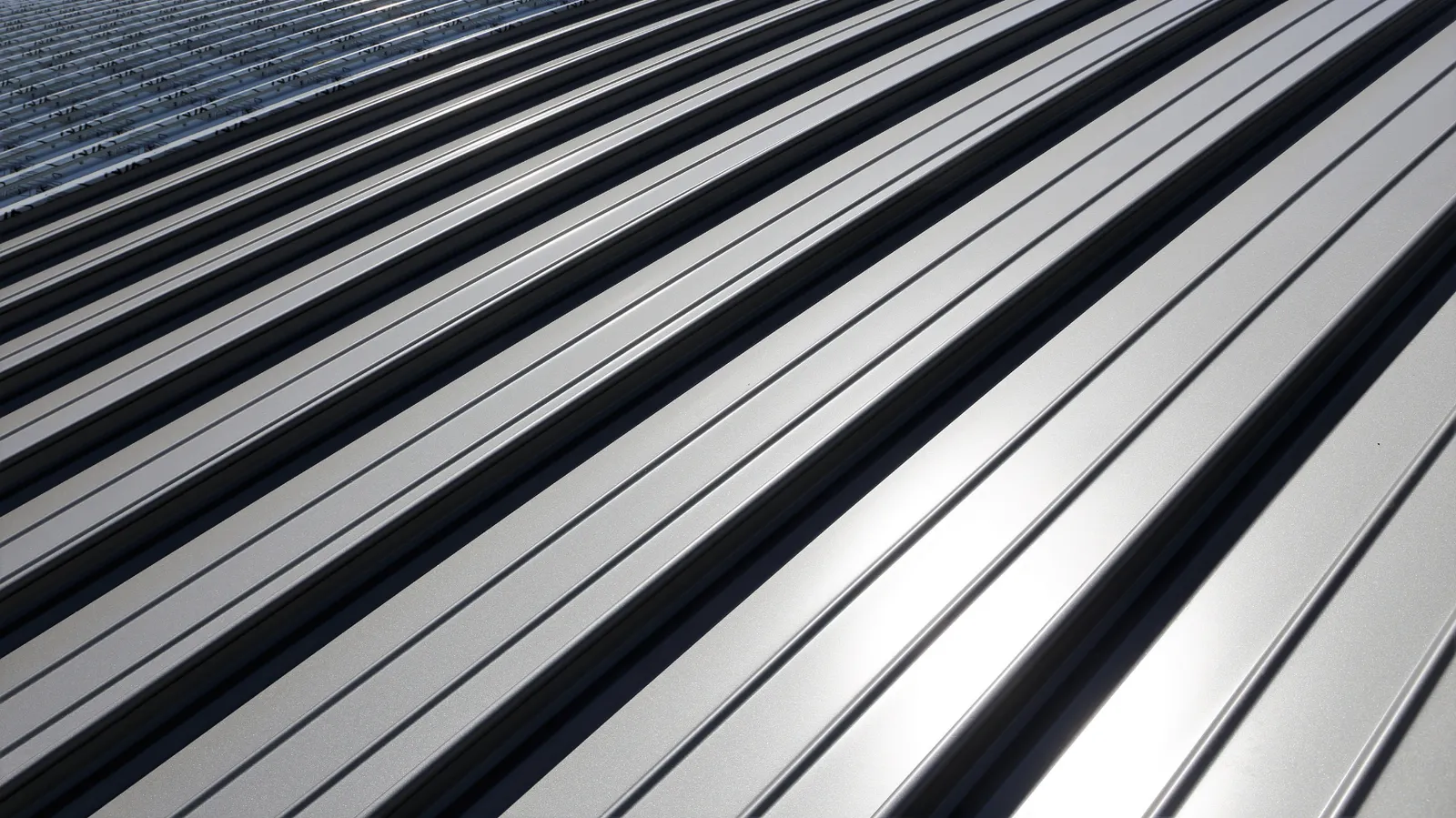
Standing-seam metal is the choice for a homeowner thinking in decades. The panels run vertically with concealed fasteners, shed water and hail well, and can last far longer than an asphalt roof, sometimes to the point of being the last roof a house needs. On a steep, complex Trophy Club roof it can look striking, and as an accent over entries, bays, or a turret it adds architectural interest that the neighborhood standard usually welcomes.
The catch is cost and specialization. Metal sits at the top of the price range, it demands a roofer experienced with standing-seam detailing, and not every color or profile suits every street, so it often needs explicit design approval. It also expands and contracts with temperature, which good detailing handles but a careless install does not. As a full roof it is a long-horizon investment, as an accent it is a way to add character without metaling the whole house. Local roofers who handle metal roofing can show where it fits a given home.
Tile, the heaviest commitment in more ways than one
Tile, whether clay or concrete, is the most permanent of the three and the most demanding. A tile roof can last generations, resists hail and fire well, and gives a home a distinctive, high-end look that suits the largest estates in areas like Hogans Glen. On the right house it is unmistakably a premium roof.
The weight is the real consideration. Tile is far heavier than shingle or metal, so not every home is framed to carry it without added structural support, and retrofitting tile onto a house built for shingle can mean reinforcing the structure first. It is also the most expensive to install and repair, and individual tiles can crack under foot traffic or impact. For a large estate designed for it, tile is a statement that lasts, for a home built for shingle it is a bigger project than the material cost alone suggests. It is worth having a local roofer confirm the structure before committing.
What the numbers look like per square
Roofing is priced per square, meaning per hundred square feet of roof, and in the Dallas-Fort Worth area the tiers separate clearly. In round numbers they land like this:
A couple of honest caveats. These are ranges, not quotes, and the final number depends on the roof size, pitch, and complexity, all of which run high in Trophy Club. Tear-off, decking repairs, and complex flashing add to any of the three. The point of the ranges is not to price your roof, it is to show the order of the tiers so the material conversation starts from something real. A closer look at roof warranties is worth it too, because the longest coverage usually depends on a certified install of the premium system.
- Architectural shingle, roughly 410 to 690 dollars per square.
- Class 4 impact shingle, roughly 500 to 780 dollars per square.
- Designer laminate, roughly 550 to 960 dollars per square.
- Standing-seam metal, roughly 820 to 1,470 dollars per square, with tile in the same premium range.
Matching the material to how long you will own it
The tie-breaker, once the neighborhood standard is satisfied, is time. If you expect to sell within several years, a quality designer laminate usually gives the best balance of premium look and reasonable cost, and it recovers well at resale. If this is a long-term or forever home, metal or tile can make sense despite the higher entry price, because the extra lifespan and low upkeep pay back over the decades you keep the house.
There is one more thread to pull, the warranty. The longest, most enhanced manufacturer coverage on a premium roof usually depends on a manufacturer-certified installer putting on the full system to spec, so the material choice and the installer are linked. Whatever tier you land on, confirm what coverage comes with it and who has to install it to earn that coverage. Picking the material is really picking a package of look, lifespan, and coverage together, matched to the home and the years ahead.
How to choose the right material for your roof
However you enter this decision, working through it in this order keeps the choice honest:
- 1) Check your association's design guidelines for any material or color restrictions before you settle on a look.
- 2) Decide roughly how many years you plan to stay in the home; that alone rules metal and tile in or out.
- 3) Have a roofer confirm your framing can carry tile's weight if tile is on the table.
- 4) Get written per-square ranges for each tier you are weighing, not just one bid.
- 5) Confirm what manufacturer coverage requires, since a certified install is often what unlocks the longer warranty.
Every premium tier has a place here; the trick is matching it to your house and timeline. Tell Trophy Club Roofing Co what you are weighing, and a local roofer will compare designer laminate, metal, and tile against your budget and put honest ranges in writing.
Compare on your roof Call (817) 541-1462