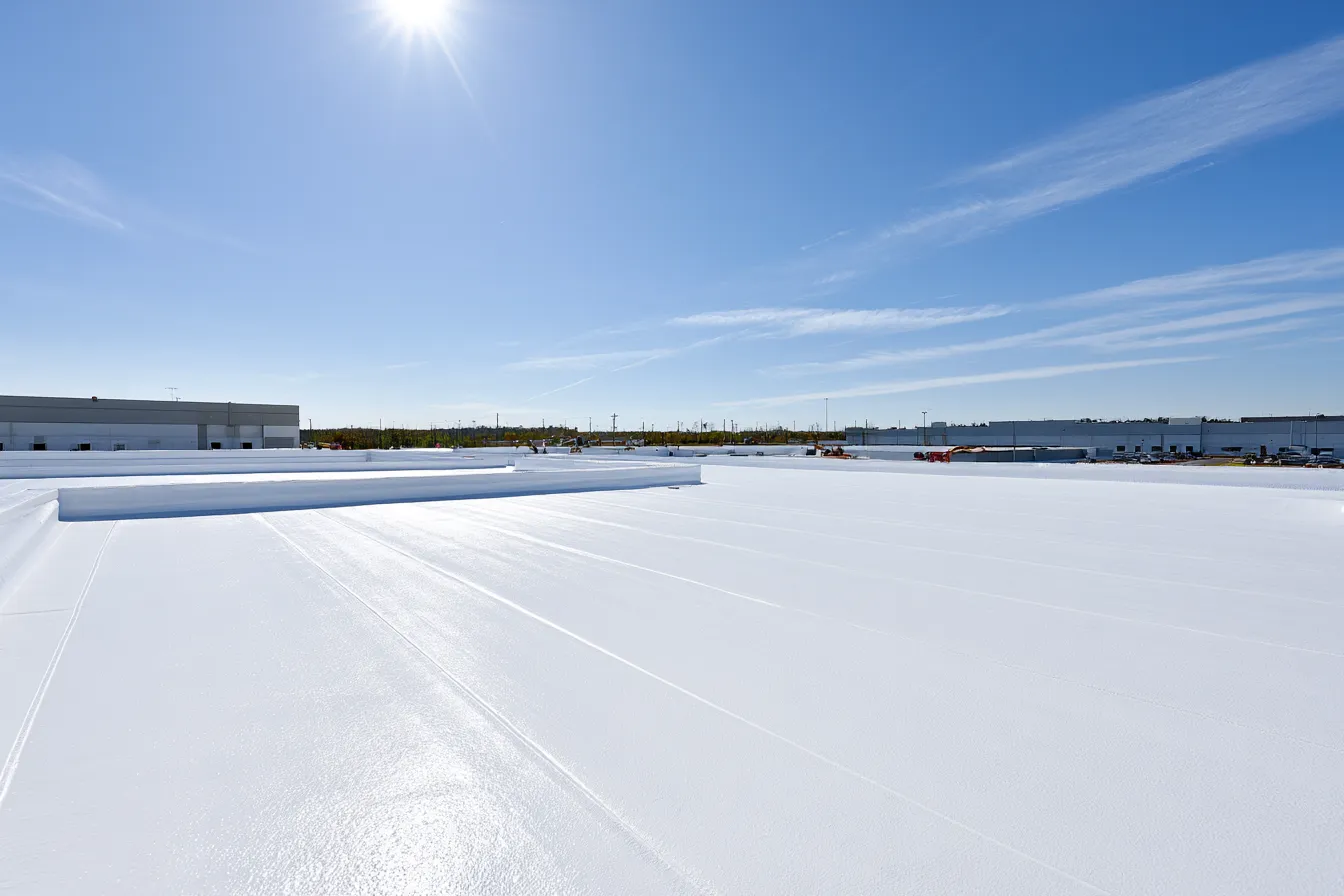
Commercial Roofing in Trophy Club, TX
Trophy Club's commercial buildings, the town-center offices and retail, sit under flat, low-slope roofs, not shingles. A local roofer walks the membrane and grades every seam before naming a number.
- Every roof face on camera, yours
- No pressure, even on a big roof
- A straight call, repair or replace
Call (817) 541-1462
A small commercial core, and a roof read building by building
Trophy Club is a residential golf town first, so its commercial buildings are modest in number: a couple of town-center retail strips, professional and medical offices, and a few amenity buildings near Trophy Club Drive. Almost none of it wears shingles; these roofs run flat or low-slope, a welded single-ply membrane, built-up asphalt, or a coating.
Each building asks something different, so a local roofer reads the building before pricing it. The deck, drains, seams, and any moisture get written up in a dated condition report before a system or a number is named. It opens with a no-cost inspection.
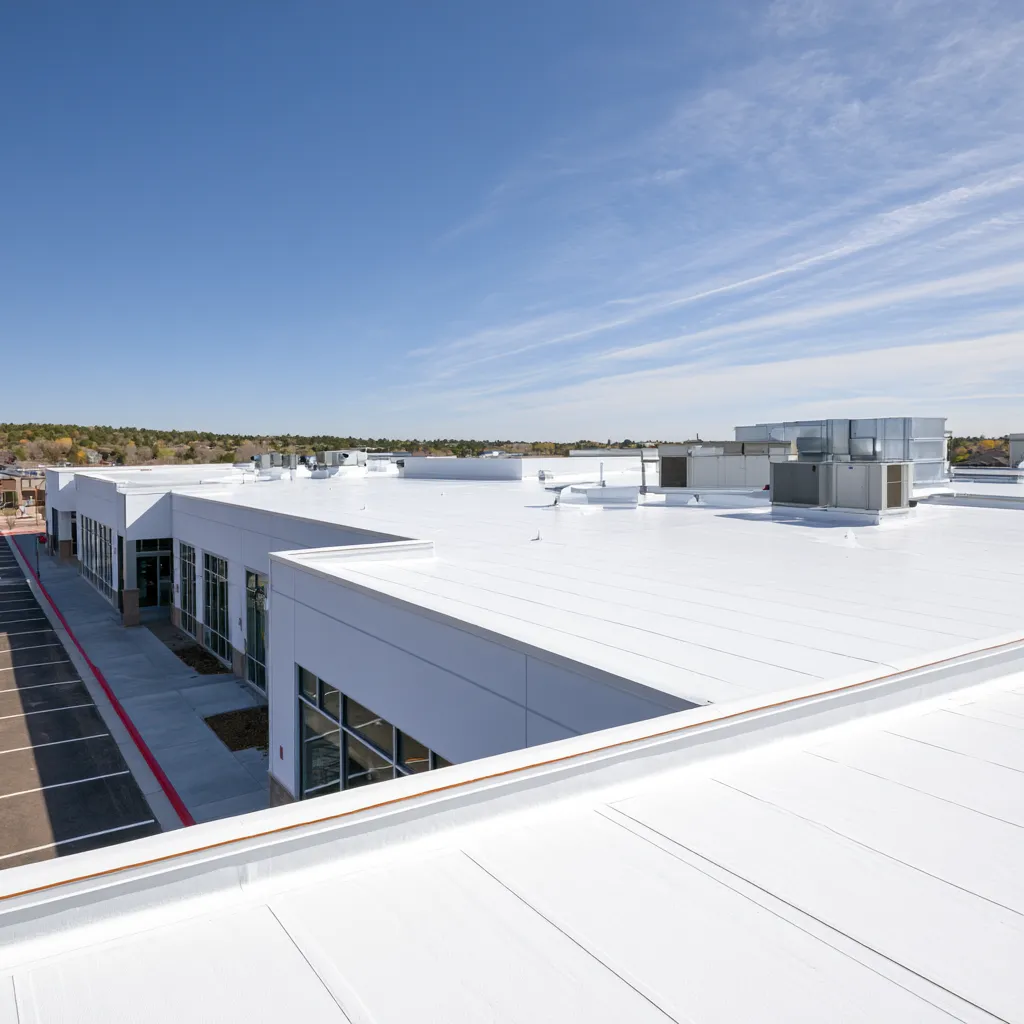
Which low-slope system a Trophy Club building calls for
No single flat roof is best, only the one that fits the building: how the deck drains, how often anyone is up top servicing rooftop units, whether a kitchen hood vents across it, and how many more years you plan to hold the property. A roofer names a system only once the roof has been walked and documented. These are the low-slope roofs installed and serviced on Trophy Club buildings, from a town-center storefront to a professional office.
TPO
The pale single-ply that most small offices and retail strips land on. Its seams are heat-welded into one continuous sheet, and the light color sends the sun back up instead of soaking it in, taking a little strain off the air conditioning below.
EPDM
A black rubber membrane chosen for endurance over looks. Left mostly alone it runs for decades across a wide, uncluttered deck, which suits the larger and simpler roofs among Trophy Club's commercial buildings.
PVC
A welded sheet made for the roofs a kitchen punishes. The cooking grease, fats, and fryer oils that degrade lesser membranes run right off it, so a restaurant near the town center, or any building venting a hood upward, is where it belongs.
Modified bitumen
Asphalt reinforced and layered in rolls, a membrane that takes steady foot traffic and a slow-draining corner without complaint. It tends to land on the smaller roofs someone climbs often to service the rooftop equipment.
Built-up roof (BUR)
Tar and gravel in the traditional way, felt and asphalt built up into a heavy, redundant deck. The labor runs higher than a single rolled sheet, but a long, dependable service history is why you still find it on the older buildings here.
Roof coatings
A fluid silicone or acrylic coat applied over a roof that is tired but still solid underneath, adding a reflective skin and years of life for a fraction of a full tear-off. The catch is that the roof has to test dry first, or the coat simply locks the water in.
Not sure what is even up there, or what a rough Denton County hailstorm has quietly taken out of it? That is what the read settles: a local roofer names the membrane, grades the years it has left, and dates any storm bruising before you weigh a repair against a re-roof. For what those paths tend to run, the roofing cost guide lays out ranges by system.
From a patched seam to a phased replacement, and the call between them
Nearly every commercial job in Trophy Club fits one of four buckets. A local roofer files your building under the right one and puts the choice in writing before any crew is booked.
- 01A repair kept to the failure
- Rather than tear off the whole roof, a single fault gets handled: a lifting seam, a drain that keeps a puddle, a brittle stretch of parapet flashing, or a leak at a rooftop-unit curb, each tied back to whatever membrane is already in place.
- 02A coating only where the roof earns it
- If the deck below tests dry and structurally sound, a sprayed silicone or acrylic coat renews the surface and adds years for a small share of a full replacement. If water has already reached the insulation, the coat traps it, which is why the moisture read always comes before any recommendation.
- 03A phased or full re-roof when the system is spent
- A new low-slope membrane gets sized and fastened to stand the wind this open ground catches, and on an occupied building it goes down in phases, section by section, so the business underneath does not have to go dark all at once. A roofer settles on it only when a roof is truly finished and no patch is worth chasing.
- 04The honest patch-or-replace call
- Four things settle whether a coating is money well spent or a full tear-off is the right answer: how much the roof gets walked, whether water is sitting in the insulation, the condition of the deck, and how long you plan to hold the property. A roofer weighs all four before advising, never after the job is sold.
Hail is no gentler on a flat roof than a pitched one, it just keeps the damage out of sight, since a bruised membrane or a torn seam shows nothing from the lot below. A local roofer photographs and dates it on that first visit, then gives a straight read on whether a claim is worth filing. What shows up on a flat roof once a storm has passed is walked through on the storm damage page.
Before you commit a Trophy Club building to a new flat roof
Plain answers on choosing a system, storm damage you cannot see from the ground, keeping tenants open through the work, and where the warranties sit.
Q1Is there enough commercial work in a town this small to take seriously?
Q2What is a condition report, and why does it come before a price?
Q3How do I know whether to coat the roof or replace it?
Q4Can we keep the offices open while the roof is replaced?
Q5If a storm totals the membrane, who documents it, and does Trophy Club Roofing Co file the claim?
Q6Who stands behind a new commercial roof, the manufacturer or the roofer?
Scope the roof and get it on file.
The roof system is walked and documented, and a written scope with a planning figure follows. The assessment is free and holds until you need it.