
Roof Repair in Trophy Club, TX
Most roof problems on a Trophy Club home come down to one failed part, not a reason to tear off the whole roof. A local roofer finds that part, matches it, and mends it.
- Every roof face on camera, yours
- No pressure, even on a big roof
- A straight call, repair or replace
Call (817) 541-1462
A matched roof repair, not a talked-up replacement
On an expensive roof, a leak invites an easy oversell: a full re-roof when the real answer is often a single part, a hardened vent boot, flashing pulled loose at a dormer, or a tab a gust unsealed.
So a repair here is precise, not a tear-off. A local roofer follows the water to the part that let go and blends the repair into the covering already up there. A free inspection photographs the real entry point before talking price, and if the covering is truly spent you get the straight word to plan a replacement.
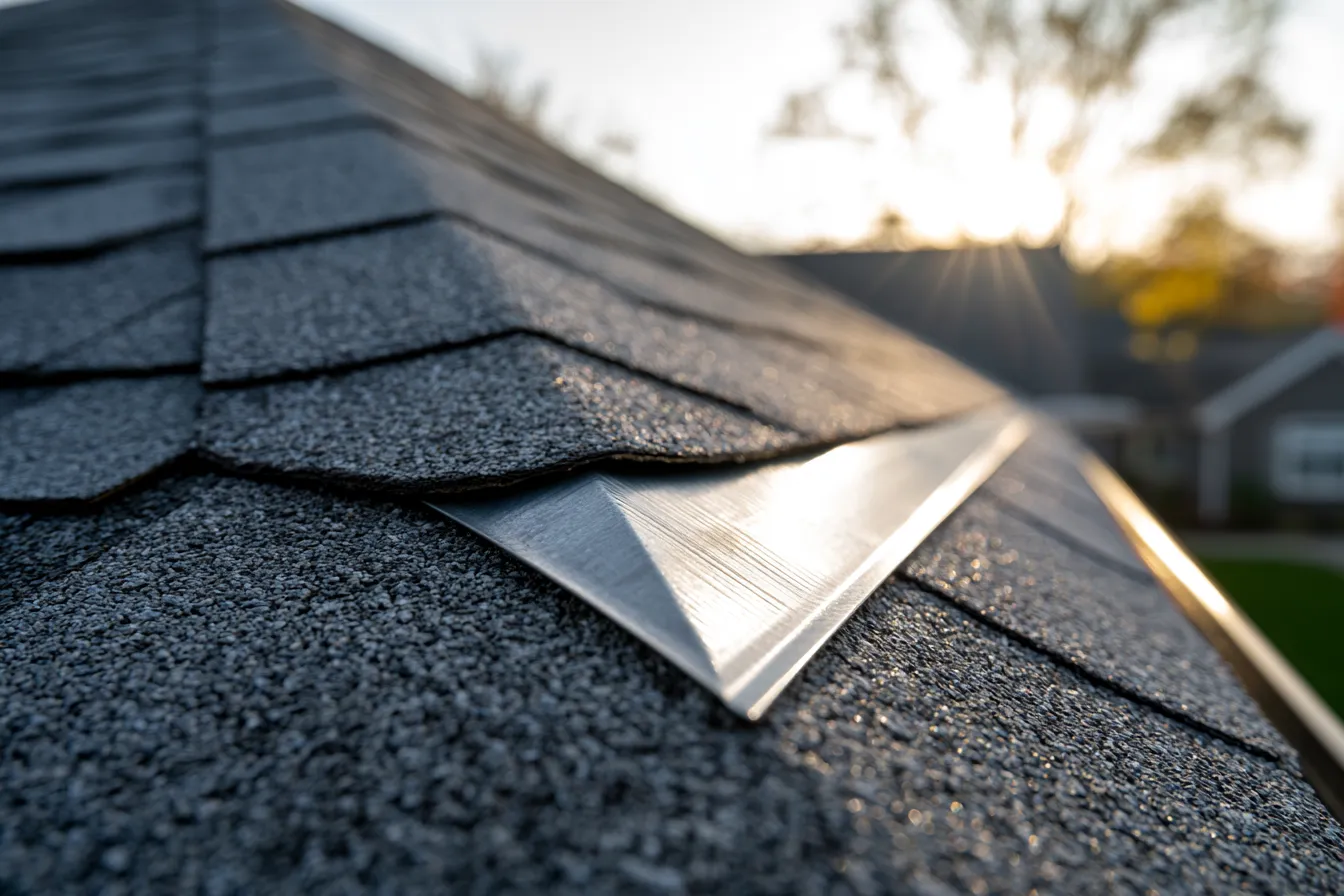
The small parts that fail while a premium roof holds
The pieces that let go while the covering is still sound, taken one at a time.
- 01Where it enters, not where it drips
- The wet mark on a ceiling shows where water came out, which is almost never where it went in. A roofer traces the path back up the roof to the actual entry point and seals that, because on a big roof the true opening can be a plane or two uphill from the stain, and dabbing caulk on the drip fixes nothing.
- 02The rubber boot around a vent
- The rubber boot sealing a plumbing vent goes brittle and splits after only a few Texas summers. It is a cheap part, but a cracked one funnels water right into the deck, and it is among the first things a roofer checks on a Trophy Club roof.
- 03Flashing at the many wall tie-ins
- Where a chimney, a dormer, or a wall line ties into the roof, a metal flashing does the sealing, and a premium home has more of those tie-ins than a plain gable. When one works loose it is the classic hidden leak, so a roofer resets or replaces the flashing properly instead of hiding the gap under a bead of caulk.
- 04Matching a designer or metal covering
- A repair on a premium covering lives or dies on the match. Some premium lines get discontinued, so a roofer hunts down the nearest profile and color and works it into the surrounding slopes; where the exact profile is gone for good, you are told that up front rather than after the fact.
Cannot tell what failed from the ground? A documented inspection finds and photographs the real culprit before a price is ever quoted.
Traced, matched, and proven dry
Find the entry point, agree the number in writing, repair the fault, and prove the seal before it is called done, all of it logged for you.
Back to the real opening
The job opens at the damp spot on the ceiling, and a roofer reads the slope uphill to the actual entry, a hardened boot, a flashing that pulled free, a valley worn thin, then photographs it so every step of the fix stands on evidence rather than a guess.
The number in writing, up front
Nothing gets lifted until the scope and the cost are written down and you have signed off, so the figure and the schedule are both fixed before work starts and neither wanders afterward. On the great majority of roofs here that write-up describes a repair, and a roofer says so plainly.
Proof the seal holds
The repair is tested with water before anyone calls it finished, you get a frank read on how the remaining planes are wearing, and the closed-out job, photos and all, goes into a file that is yours.
Early tells on an upscale roof worth a call
Spotting these early is what keeps a repair a repair.
- Loose or lifted flashing where the roof meets a chimney or a valley, often the first place a big roof lets water in
- Decking that flexes underfoot or an attic that smells damp, a sign water has been getting in for a while
- A ceiling or upstairs stain that shows a day or two after a storm, usually smaller than the leak feeding it
- Gutters overflowing or pulling from the fascia, backing water up under the first course of shingles
- A thin line of daylight showing through the attic boards where a shingle has lifted
Catch any of these after bad weather and a look now beats a bigger bill later. If you suspect hail did it, the storm and hail guide walks through documenting it while the date is still easy to establish.
Why a matched repair beats a needless tear-off
A single repair is a rounding error next to a full premium re-roof, and when the covering still has good years, the choice is easy: mend the part that failed and hold onto the life that is left.
The bill tracks the failure, not the roof. A roofer names the repair figure in writing after the leak is pinned down, not before, and if a replacement is ever the honest answer, the cost of a new roof sets out the ranges by material.
Check the replacement ranges- One traced leak is a repair, never a reason to strip a good premium roof
- A boot is a small bill; failed flashing or a rebuilt valley runs higher
- Trouble kept to one spot mends; trouble on every plane means a re-roof
- You get the figure once the source is found, and then it stays put
Matching a designer roof is the real skill
Repairs on a Trophy Club roof almost always come down to one worn component, not the whole covering: a split boot, flashing loosened at a dormer, a valley scoured by hail.
Whether your roof is a clean fix or a covering truly at its end, a roofer tells you plainly. In the newer Highlands and Hogans Glen a matched repair buys years; in older Knoll homes the call tips toward replacement more often.
- 01The hardware quits before the covering
- Boots, flashing, and valleys surrender first, long before the designer covering above them, the textbook case for a repair.
- 02The covering makes the match matter
- Because the material is premium laminate, tile, or metal, the value of a repair is matching it into the surrounding planes so the fix disappears.
Not sure whether to mend or replace? The answer comes after a roofer is up there with a camera, and always before any price.
Before booking a repair: the common questions
The things owners of upscale homes tend to ask first.
Q1How do I know a roofer isn't just selling me a whole new roof?
Q2Can a roofer match my designer or metal roof for a repair?
Q3Will a repair actually hold, or am I only postponing a new roof?
Q4Does a roof repair come with any warranty?
Q5Once I get in touch, how quickly can you come out?
Q6The shingles look perfect from the ground. How is it leaking?
Find the real leak, fix just that
Say what your roof has been up to and a local roofer will find where the water truly gets in, show you the photos, and set one firm repair price and a clear timeline down on paper. On a sound roof here that is nearly always a fix rather than a replacement.