
Hail Damage Roof Repair in Trophy Club, TX
After a hailstorm, a Trophy Club roof can hide bruised shingles that only show up on the slope. A local roofer reads every plane, dates the damage, and documents it before anyone talks numbers.
- Every roof face on camera, yours
- No pressure, even on a big roof
- A straight call, repair or replace
Call (817) 541-1462
What hail does to a big designer roof
The trouble with hail here is the size of the bill behind it. These roofs are large and steep, finished in designer laminate, tile, or metal, so a stone that strips granules and dents the mat means matching an expensive covering across a lot of roof.
A hail repair here is not priced from the driveway. A local roofer goes up plane by plane, marks each bruise and loosened panel, and ties it to the day the storm crossed town. The documented read is what carries a hail claim if you file.
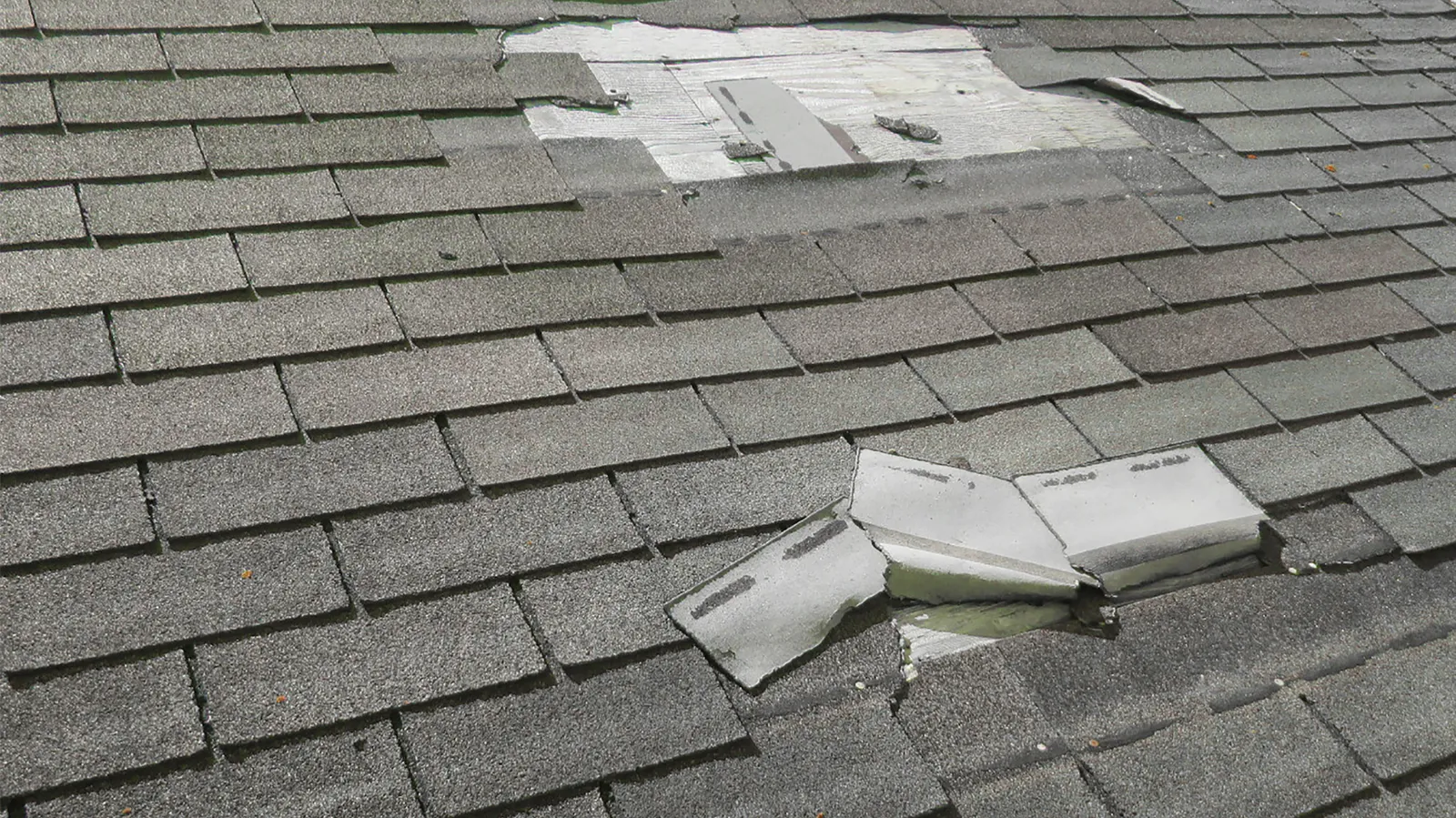
What hail damage repair covers on a complex roof
The findings that prove a hail hit and carry the claim, logged plane by plane.
- 01The bruise the granules hide
- A stone can peel the granule layer and press a soft dent into the mat underneath while the shingle above still looks intact. On a designer laminate that bruise is easy to miss and expensive to leave, so a roofer finds each one by feel, working the slope rather than scanning it.
- 02Seals and panels the wind worked
- Wind does its own damage and it hides better than hail. A gust can split the adhesive strip, lift a course of laminate along a hip, or loosen a clip on a metal panel, and each of those gets flagged even when the piece has settled back down and reads as flat from the yard.
- 03Proof stamped into the metal
- The soft metal keeps the receipts. Dented gutter aprons, a pocked vent cap, and hail marks across the AC coil are the collateral evidence that a real stone landed, and they help anchor the hit to a specific storm on the county log even when the shingles are ambiguous.
- 04A full map before the adjuster comes
- On a roof this large an adjuster can only cover so much, so the full set of findings gets photographed, timestamped, and organized by plane before that visit. When the adjuster arrives, the proof is already assembled rather than being hunted for on the day.
A claim is only as strong as what backs it, and that record is the backing. If you are unsure where normal aging stops and storm damage starts, the storm and hail guide covers the county picture, while a free inspection measures your own roof against it.
Read the whole roof, then match the fix to it
Walk the roof plane by plane, anchor each mark to the storm, put the record in your hands, and touch only the areas the hail truly reached.
Up one plane and down the next
A roofer moves across the roof one face at a time, tracing every bruise and lifted run and capturing it on camera. On a complex roof the findings that decide a claim sit on the faces and in the valleys you cannot see from the yard, which is the whole reason the read happens up top.
Each mark tied to the storm
The photos carry dates, and a roofer squares those against Denton County's hail record. When the loss date on your file matches a storm the county already logged, a carrier has far less room to wave the claim off, which matters more when the number at stake is large.
Handed off, and stood behind
You are handed the dated set and an honest recommendation, mend the hurt planes or plan a new roof, and a roofer can stand on the slope alongside the adjuster so nothing on a big roof gets written off as ordinary wear.
Only what hail touched
A roofer matches the covering to the panels already on the roof and touches only the hail-struck areas, leaving every sound plane where it is. You pay for the genuine repair and nothing invented on top of it, and on a premium roof the matching itself, blending a designer laminate or a metal profile into what is there, is where most of the craft goes.
Tells that the storm got to your shingles
What to check for once a storm clears Trophy Club.
- Gutters brimming over or dropping off the fascia where the storm overloaded them
- Fresh dents on the metal, the gutter aprons, a vent cap, the condenser coil out back
- A run of tabs or a metal panel edge lifted along a ridge after a windy night
- Scattered soft, dull spots where the surface is bruised, easy to miss until you are close
- Chimney or valley flashing dinged or bent up where the stones struck
You will not spot most of this from the yard, so booking a documented inspection after a serious hailstorm is worth the time even when the roof looks perfect from below. If a storm already opened a leak, date-stamped photos first, then the tarp; carriers call that reasonable protection and cover it.
Why a hail hit on a premium roof runs high
Hail seldom leaves a tidy repair bill on a roof like this. A few bruises on one plane can be a targeted fix, but scattered damage across a large, premium covering, especially one already carrying some age, argues for a full replacement, and the cost of matching designer material across a big roof is what pushes it toward a claim.
No real number lands until the roof is read. Once every plane is photographed, a roofer commits the repair figure to paper, and if filing is the wiser move, that documented set is what backs the claim. The cost of a new roof walks through the ranges by material tier.
See the cost ranges by tier- A few bruises on one plane can be a targeted repair, paid out of pocket
- Damage spread across a big designer roof leans hard toward replacement
- Matching a discontinued designer shingle across many planes is what drives the cost
- You get the number in writing only once the whole roof has been read, and then it holds
Why hail costs more on a Trophy Club roof
The roofs here run large, steep, and premium, so hail costs more than a few streets over: the same storm that dings a builder-grade roof can put a five-figure dent in a designer one.
Denton County keeps a real hail record, and the biggest recent stones landed just north of town around Bartonville, not on it. A roofer used to these premium roofs records every bruise one plane at a time while it is fresh.
- 01Matching is the expensive part
- On a premium covering the cost is less in labor than in matching the material across the damage, which the read scopes first.
- 02Harder shingles hold up
- If yours seems to catch every storm, class-4 impact shingles resist better and often earn a break on the premium.
Unsure the last storm touched your roof? A free inspection reads it against the county record and hands you a plain answer.
Hail questions from Trophy Club owners
What comes up once a storm has moved through town.
Q1The hail did not look huge. Can it still total a roof like mine?
Q2My roof is big and complicated. Will an adjuster catch everything?
Q3Can a roofer even match my designer shingles?
Q4A contractor offered to cover my deductible on the job. Good sign?
Q5Half my street is getting new roofs. Should I file too?
Q6The storm was a while ago and a stain just appeared. Too late?
Document the roof before anything gets covered up
Reaching for a fast patch after hail is the wrong first move, since it seals up the very evidence a big claim depends on. Have the roof read first: a local roofer covers every plane, pins the damage to the day the storm hit, and tells you straight whether you are looking at a fix, a replacement, or a claim.